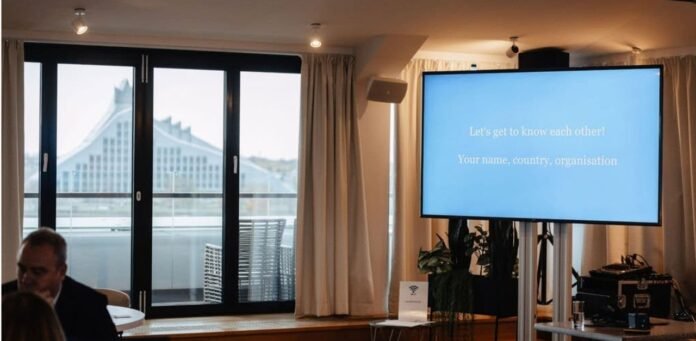
A single photograph contains more information than most people realise. The architecture visible through a window. The language on a screen in the background.
The angle of light hitting a building across the street. Every detail is a data point, and for Open Source Intelligence, data points are the beginning of a story.
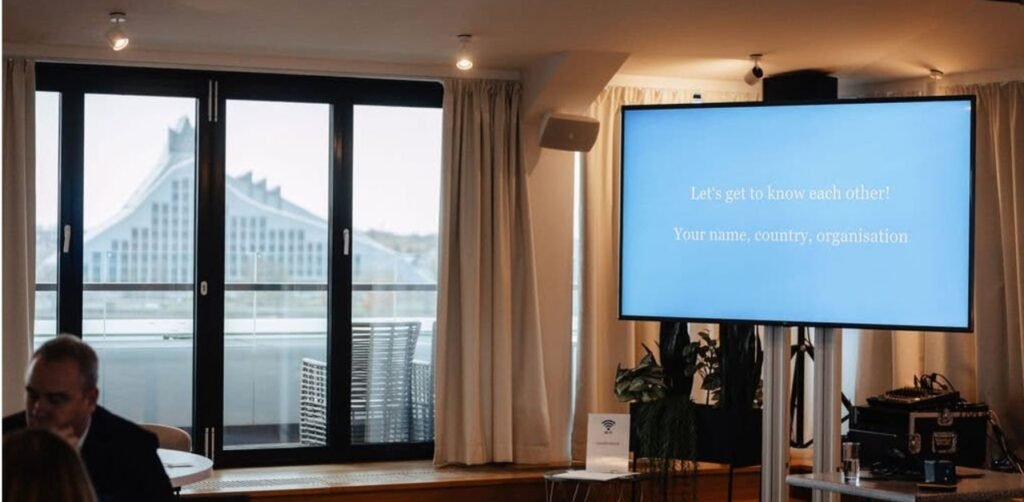
We will use this conference photograph as an example to answer four questions that any investigator would naturally ask.
- Where exactly was this photo taken?
- What event was taking place?
- Who organised it?
- Who were the key speakers?
Finding The Location
Location comes first. Everything else depends on it.
The image offers a few immediate clues. The presentation screen shows text in British English. A WiFi sign is visible in the background but the network name is too small to read. Neither clue is strong enough to build on directly.
The most useful feature is the unusual pyramid shaped building visible through the window.
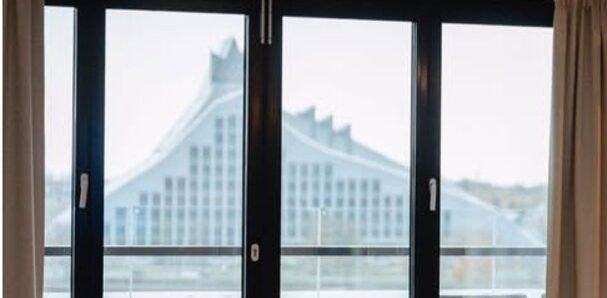
Experienced investigators always prioritise the most distinctive and unique element in an image. The more unusual something is, the more powerful it becomes as an investigative anchor.
The obvious move is to crop that section of the image and run a reverse image search. But this fails, and understanding why matters.
When human eyes look through a window, the brain automatically filters out the curtains and the frame to focus on what lies beyond. Reverse image search engines do not do this. They treat the entire image with equal weight, and when a window frame dominates the foreground, the engine fixates on the frame rather than the building behind it. The results come back full of curtain and glass panel matches, missing the pyramid building entirely.
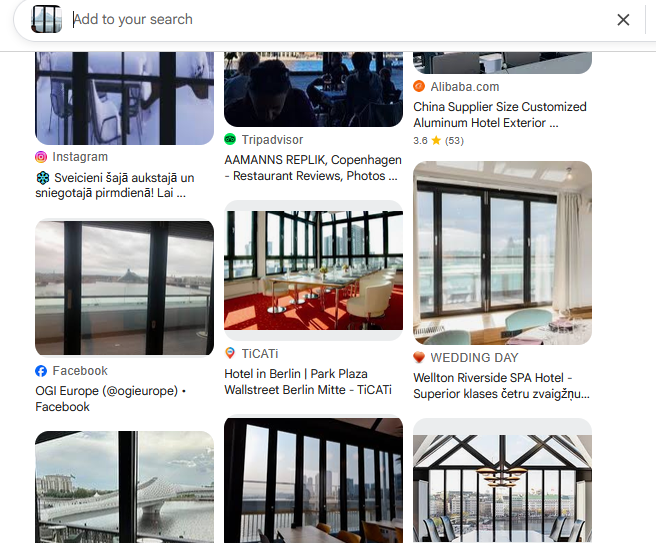
The solution is to remove the foreground clutter before searching. Tools like Cleanup.pictures (which is the easiest web-based tool) or Canva make this straightforward.
The solution is to remove the foreground clutter before searching. A tool like Cleanup.pictures makes this straightforward. You upload the image, type “remove window frames” in the promptbox and it instantly removes them, giving you a clean and unobstructed view of the building outside.
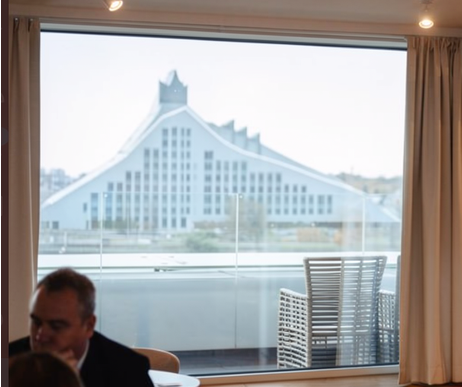
With the clutter removed, the reverse image search returned an immediate result. The pyramid shaped building was the National Library of Latvia, in Riga.
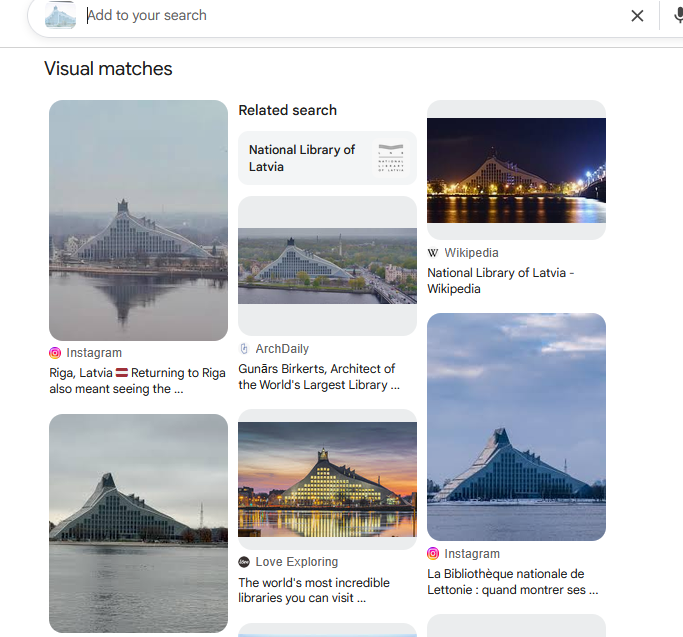
A quick look at the area on Google Maps narrowed the vantage point to one building. Only one structure directly opposite the National Library had glass-fronted balconies matching the angle in the original photo: the Wellton Riverside Spa Hotel. The hotel’s own conference facilities page confirmed it with an exact room match, National Library visible through the windows.
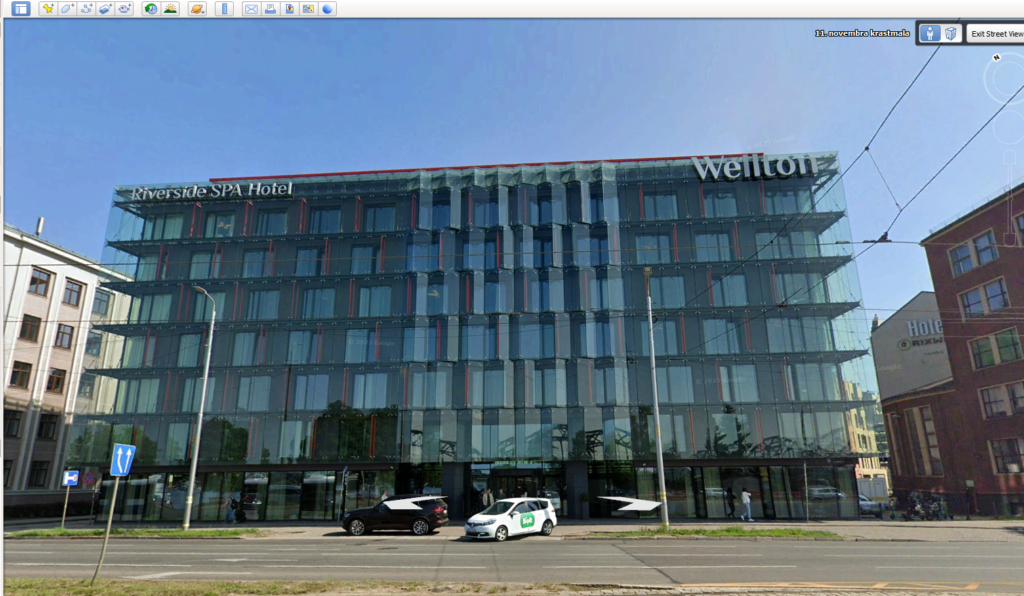
Location confirmed. Riga, Latvia. The Wellton Riverside Spa Hotel.
Identifying The Event
The hotel website listed no public calendar of private events, and standard search queries returned nothing useful. This is a common wall, and it requires a change of approach.
Geotagged social media is the reliable alternative. Instagram’s location search surfaced a set of tagged photos from the Wellton Riverside around the relevant dates.
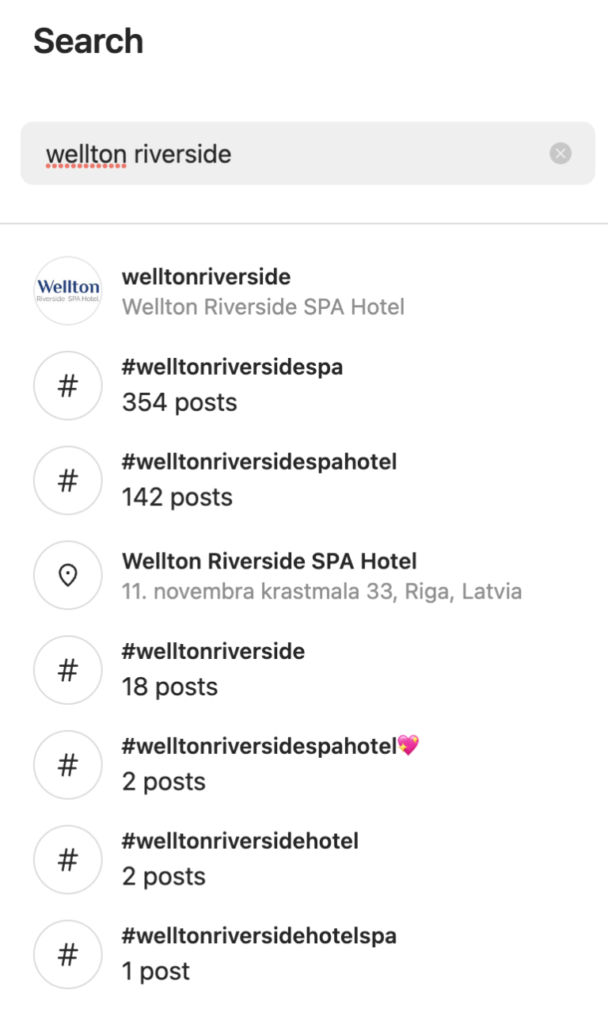
One image posted on October 25th used the hashtag MILSummit2022.
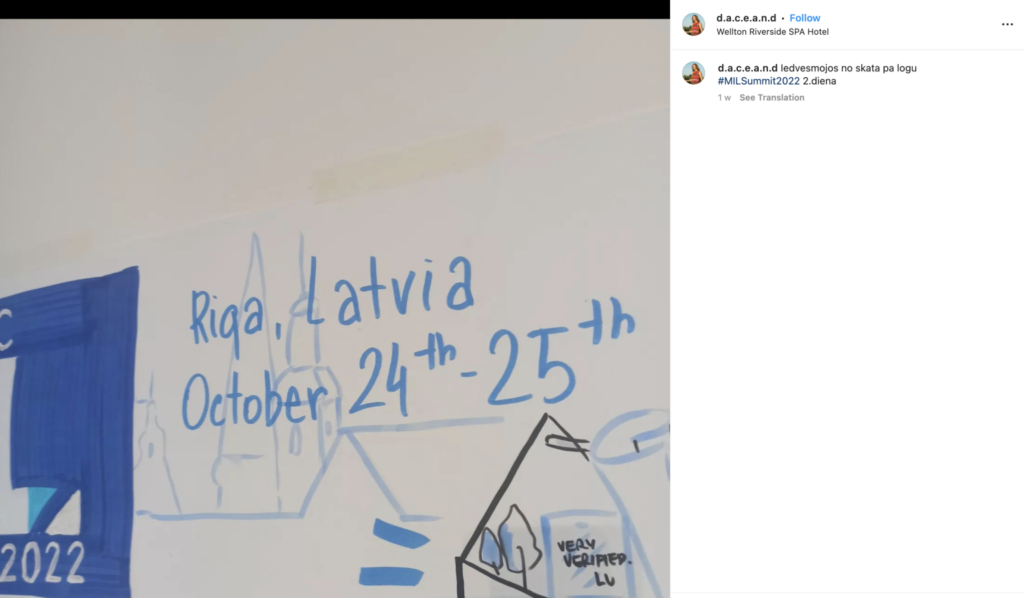
A second photo from the same user referenced media literacy, disinformation, and verification as the core themes of the event.
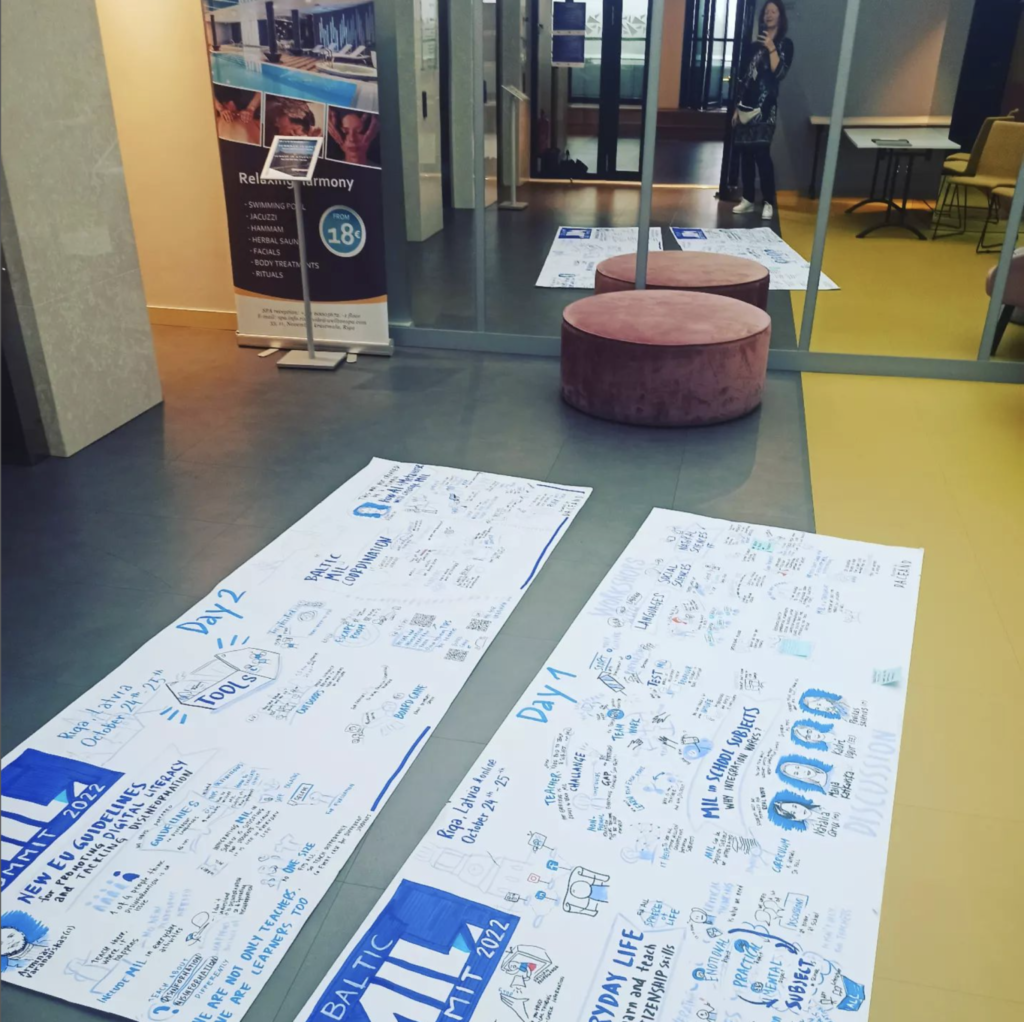
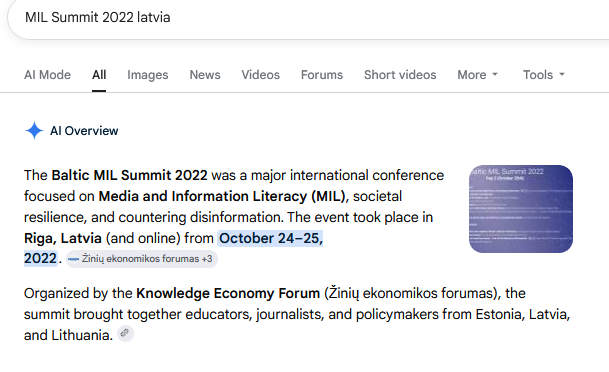
That was enough to search further. The Baltic MIL Summit led directly to the Žinių Ekonomikos Forumas, a Lithuanian organisation that had hosted the event at the hotel on October 24th, 2022.
Their Facebook page contained hundreds of conference photographs confirming the location and the dates, and eventually produced the exact original photograph used as the starting point for this investigation.
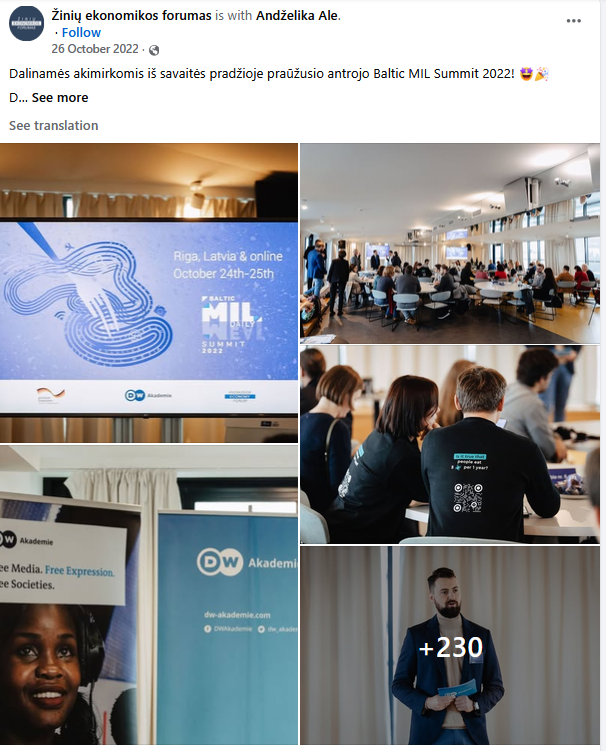
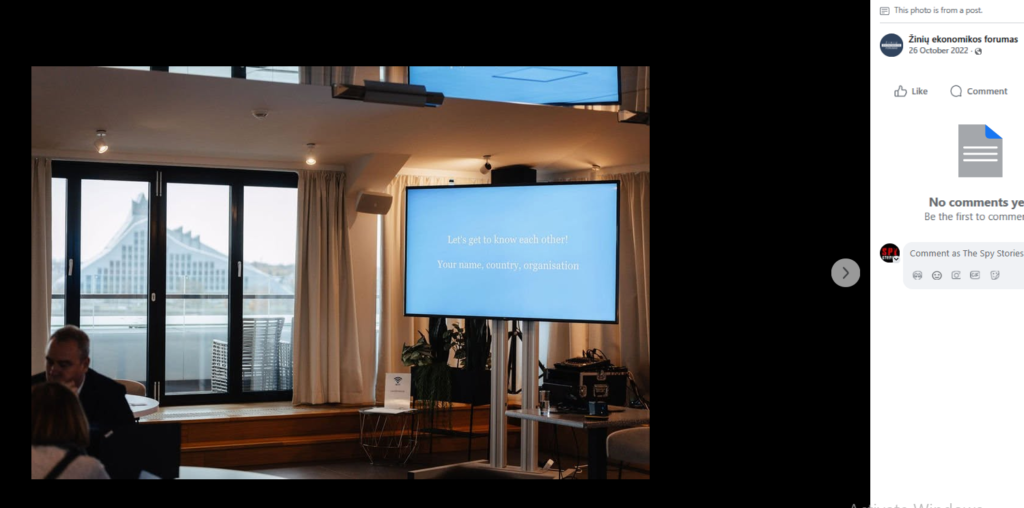
Event confirmed. The Baltic MIL Media Literacy Summit, hosted by the Žinių Ekonomikos Forumas, October 24th to 25th, Wellton Riverside Spa Hotel, Riga.
Who Organized The Event And What Was Their Agenda?
With the event identified, the next step is understanding who was behind it.
The Žinių Ekonomikos Forumas, known as ZEF, is a Lithuanian non-profit focused on media literacy and information quality. Their website published a full write-up of the Baltic MIL Summit along with a downloadable PDF schedule, which becomes the key document for the rest of the investigation.
The schedule confirmed that Deutsche Welle Akademie, the international media development arm of Germany’s public broadcaster, was one of the most prominently represented external organisations across both days, with multiple team members listed as speakers and session leads throughout the programme.
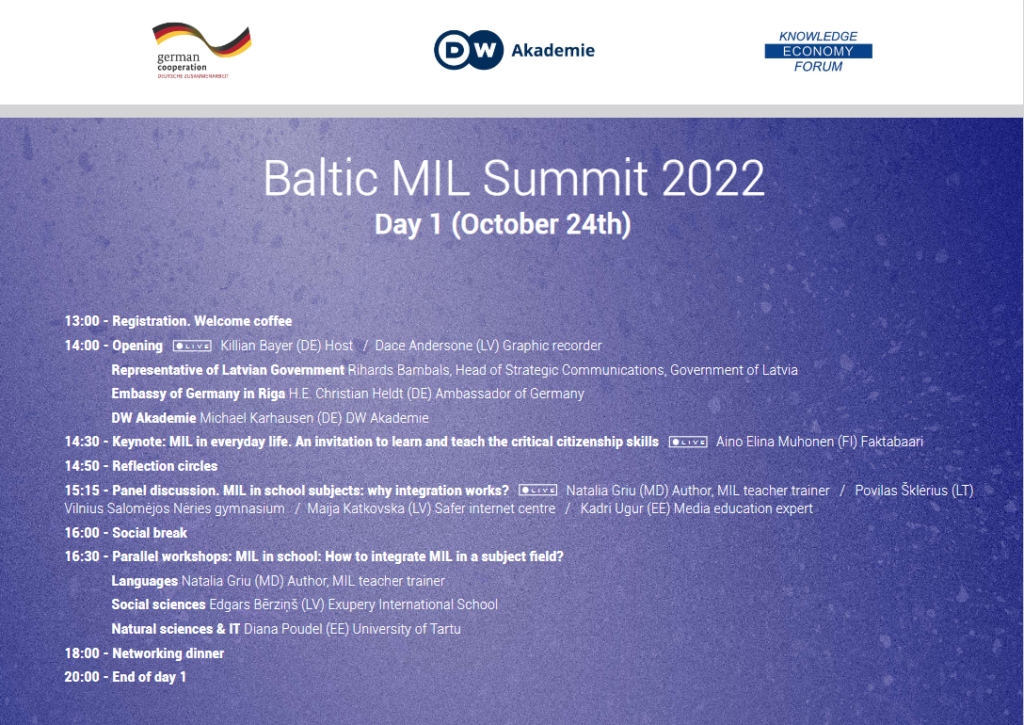
Who Were The Key Speakers And What Did They Present?
The downloaded schedule PDF laid out the full two-day programme. Here is a breakdown of the key speakers and their sessions:
Day One — October 24th
Killian Bayer: Host and session moderator
Aino Elina Muhonen: MIL in Everyday Life — media literacy as a core citizenship skill
Natalia Griu, Povilas Šklėrius, Maija Katkovska, Kadri Ugur: Panel discussion on integrating MIL into school subjects
Natalia Griu, Edgars Bērziņš, Diana Poudel: Parallel workshops on embedding MIL across languages, social sciences, and natural sciences
Day Two — October 25th
Arminas Varanauskas: New EU guidelines for digital literacy and tackling disinformation
Evaldas Rupkus: Training media literacy through games, DW Akademie tools
Diana Poudel: Board game — Clash of the Hackers
Kaspars Rūklis: VeryVeryfied.eu online media literacy course
Lena Nitsche: GoVerify! How to use playful MIL methods — the centrepiece of DW Akademie’s contribution
Conor Dillon: How AI and the Metaverse will change media literacy going forward
Evaldas Rupkus: Closing remarks on behalf of DW Akademie
Like us on Facebook, follow us on Instagram and TikTok, and subscribe on YouTube for more stories from the world of espionage and OSINT.