
Summary
Ukraine struck a Russian drone development facility deep inside enemy territory using its own long-range FP-1 drone.
What Happened
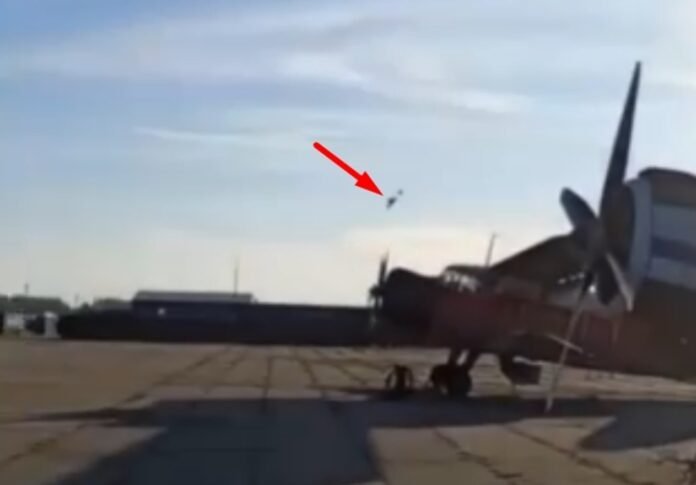
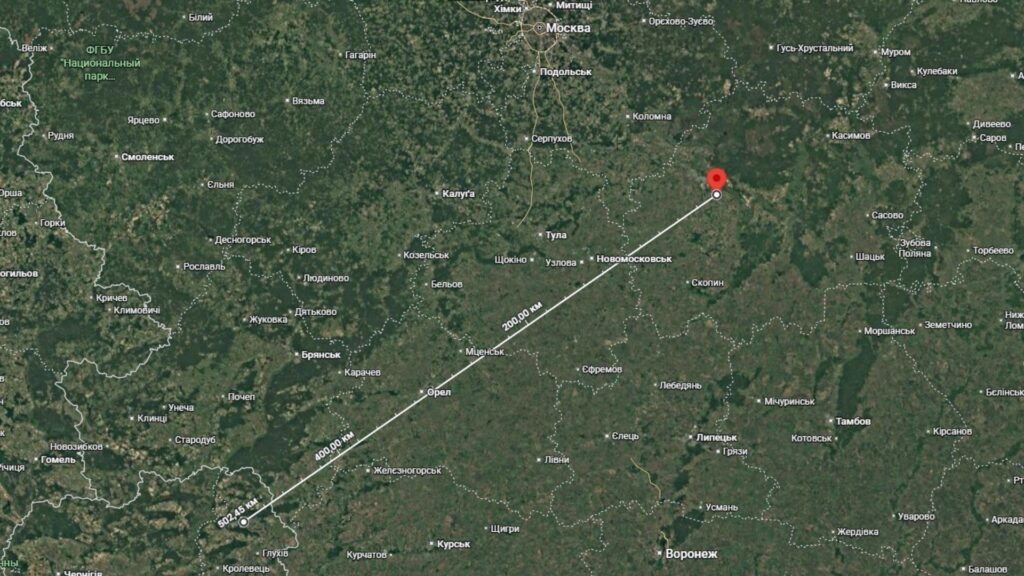
A Ukrainian FP-1 long-range strike drone hit hangars at the Protasovo air base in Russia’s Ryazan region, more than 500 kilometers from the Ukrainian border. The target was infrastructure linked to the development and production of unmanned aerial vehicles. Analysts from the Dossye Shpiona intelligence monitoring group identified an active UAV research and production center within the base.
The strike was recorded on video by a base employee using a mobile phone. The Ukrainian company Fire Point manufactures the FP-1 drone used in the attack, which can carry a payload of up to 113 kilograms over a range of 1,600 kilometers.
Footage of the Strike
Why It Matters
This was not a strike on a runway or fuel depot. Ukraine deliberately targeted the facility where Russia develops and manufactures its drones, turning Russia’s most asymmetric weapon against itself. The strategic logic is clear: degrade the enemy’s ability to produce the tools it uses most on the front line.
Ryazan lies deep inside Russian territory, beyond the range of most conventional battlefield systems. Reaching it required a drone capable of sustained long-range autonomous flight, which the FP-1 demonstrates. This signals that Ukraine’s domestic drone industry has matured beyond front-line harassment into a credible deep-strike capability.
The choice of target also carries an intelligence dimension. Identifying a UAV research and production center inside a military base — not a known industrial site — suggests Ukraine has developed precise targeting intelligence on Russia’s drone development infrastructure, not just its conventional military assets.
What Are FP-1 Drones?
The FP-1 is a Ukrainian long-range strike drone developed by Fire Point, a domestic defense company, and is one of the more capable one-way attack systems Ukraine has fielded. It can fly up to 1,600 kilometers and carry a warhead of up to 113 kilograms, enough to cause serious structural damage to hardened infrastructure.
The drone was publicly unveiled at a Kyiv defense exhibition in May 2025, but it had already seen combat, so its debut was a confirmation rather than an announcement.
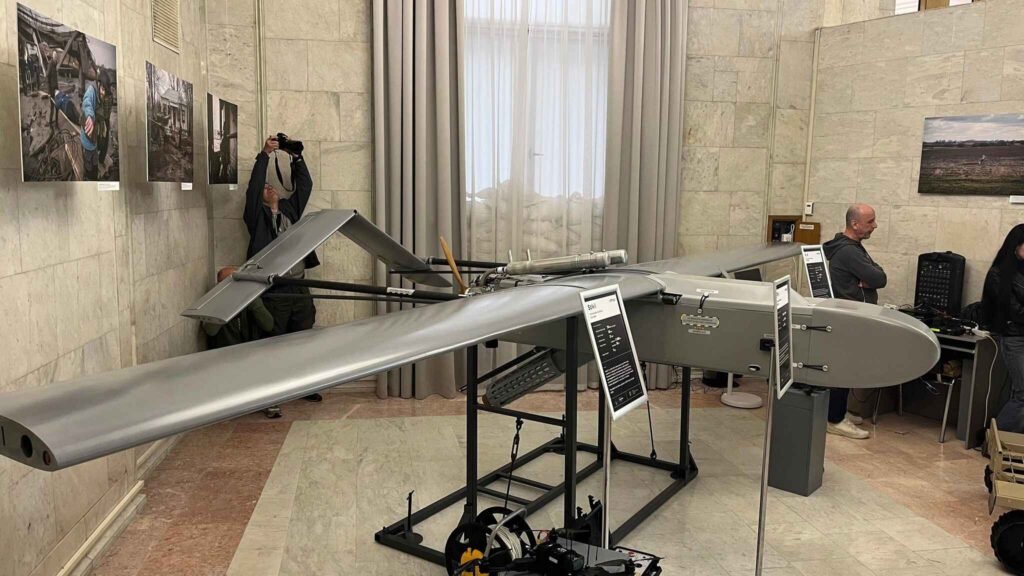
What makes the FP-1 significant is how it is built. It uses plywood structural elements and simplified assembly techniques, engineered for fast, low-cost, large-scale production. This is not an expensive precision weapon produced in limited numbers. It is designed to be manufactured at volume, which matters enormously in a prolonged war of attrition.