
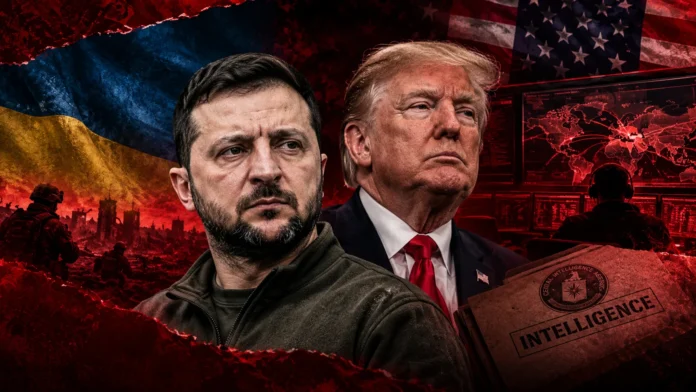
The United States has resumed sharing critical intelligence with Ukraine after a brief pause that left Ukrainian cities without warning during Russian ballistic missile strikes, President Volodymyr Zelensky confirmed on Sunday.
What Happened
Speaking on NBC’s Meet the Press, Zelensky confirmed that US intelligence sharing had been interrupted but was later restored. “We are very thankful for this,” he said. “Now it works.”
The pause came during a week in which Trump and Zelensky’s relationship deteriorated sharply, raising fears in Kyiv about the durability of American support.
Zelensky also expressed concern about other US decisions, including a deal to import Russian diesel and a move to waive sanctions on Russia that had been scheduled to take effect this week. “If the United States will officially take the side of Russia, of course we will not prevail,” he said.
Why Did the US Stop Sharing Intelligence
The pause was never formally explained by Washington. Trump said earlier in the week that intelligence sharing was still ongoing, even as Ukrainian officials reported that some Russian strikes had occurred without warning, a direct contradiction that pointed to something having gone wrong behind the scenes.
The interruption coincided with a widening public rift between Trump and Zelensky, a relationship that has grown increasingly volatile as Trump pursues negotiations with Moscow.
The timing suggested the pause may have been connected to political tensions rather than operational necessity, though neither the White House nor the Pentagon offered a clear explanation.
Why US Intelligence Is Vital for Ukraine
Russia’s ballistic missiles travel at speeds that leave almost no margin for error. Without early warning, Ukrainian air defence systems cannot position themselves in time and civilian populations cannot take shelter before impact.
The United States provides satellite and signals intelligence that tracks missile launches from the moment they leave Russian territory, giving Ukrainian operators a narrow but critical window to respond.
That window is often the difference between a missile being intercepted and a building being destroyed. During the pause, that window closed. Ukrainian officials confirmed that strikes occurred without any advance warning reaching their air defence networks, exposing just how dependent Kyiv remains on American intelligence infrastructure to protect its cities from the kind of mass casualty attacks Russia has been carrying out since the start of the war.
If you are interested in espionage or spy stories, check out our mini documentaries on YouTube!!