People tend to think the hostility between Iran and the West is a permanent feature of the world, something ancient and inevitable, as fixed as geography. The images are familiar enough. Missiles exchanged across borders, proxy wars fought through intermediaries, decades of sanctions and rhetoric and mutual contempt. And yet history has a way of making fools of those who assume the present has always been this way.
Consider this: the same Russia that today supplies Iran with drones to target American bases and warships across the Middle East once plotted to overthrow the Iranian government entirely. And the same Western intelligence services that have spent decades trying to contain, destabilise, and in some cases destroy the Islamic Republic of Iran, once handed Ayatollah Khomeini the intelligence that saved his revolution from being crushed in its infancy.
They did not do it out of sympathy for Khomeini. They did it because a tall, unhappy KGB major walked across a street in Tehran one morning in 1981 and asked a British intelligence officer for help with his marriage.
This is that story.
Who Was Vladimir Kuzichkin
Vladimir Kuzichkin was not the kind of man who was supposed to defect. He was born in Moscow in 1947, joined the Soviet Army, served in East Germany, and then enrolled at the Institute of Asian and African Countries where he studied Iranian history and Persian. He was exactly the kind of linguistically gifted, regionally specialised officer the KGB needed and actively cultivated. Before he even finished his studies, he was recruited into Soviet intelligence.
Read More: US Intel Says Putin Thinks US Is Weak After Iran War
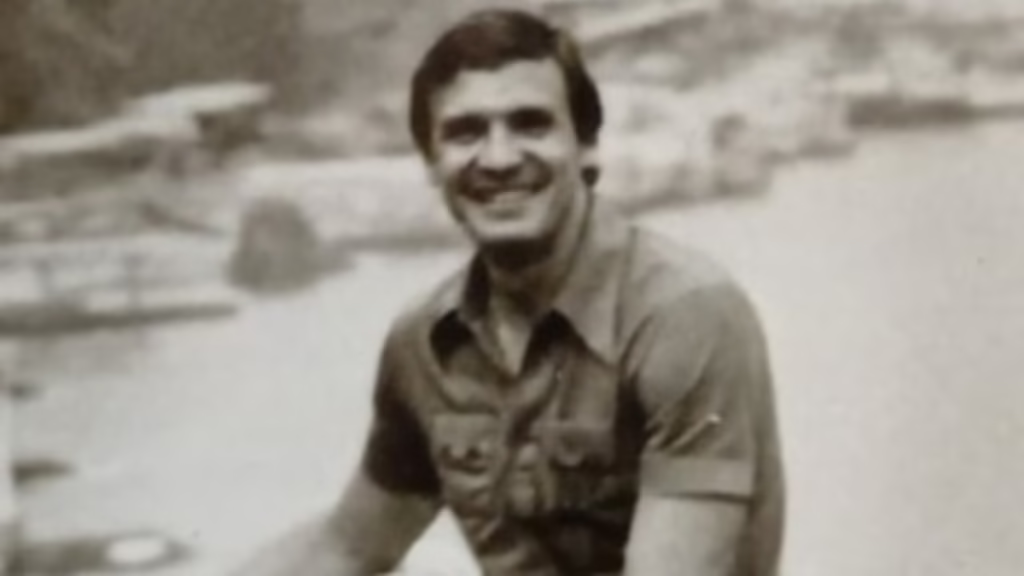
His first posting to Iran came in 1973, officially as an interpreter for the Ministry of Foreign Trade, working at an iron mine in the city of Bafq. It was cover. After returning to Moscow, he was sent to the Red Banner Institute, the KGB’s elite training facility, and graduated in 1976 as an officer of Directorate S, the illegal intelligence unit of the First Chief Directorate. Directorate S was not a posting given to ordinary officers. It was responsible for running illegal agents, people operating under deep cover with no official connection to the Soviet state. His department covered Iran, Afghanistan, and Turkey.
By 1977 Kuzichkin was in Tehran, operating under the cover of an attaché at the Soviet embassy, working in what was known as the N Line, the section responsible for overseeing and protecting the activities of illegal KGB agents in the country. He was thirty years old, professionally accomplished, and stationed at the centre of one of the most volatile intelligence environments on earth. The Iranian Revolution was about to happen, and the KGB had significant plans for what came after it.
The Soviet Plot to Take Over Iran
What is rarely discussed in mainstream accounts of this period is how seriously the Soviet Union considered using the chaos of the Iranian Revolution as an opportunity for strategic expansion. Khomeini’s government had come to power on a wave of religious nationalism that was genuinely hostile to both superpowers, but the Soviets calculated that the Iranian left, particularly the Tudeh Party, could be cultivated and eventually used to move Iran into the Soviet orbit.
Read More: The Oldest Trick in Espionage and Why It Still Works
By the summer of 1981, that calculation had evolved into something far more concrete and far more dangerous. Soviet-backed Iranian communists had been systematically armed and organised. Weapons had been stockpiled. A coup was being planned with the direct involvement and support of Soviet intelligence, and the operation was nearly ready to move. Tanks were positioned at Iran’s northern borders, in Soviet-occupied Afghanistan and in Turkmenistan, ready to roll across the frontier the moment the internal uprising created the conditions for intervention. The prize was extraordinary: control of the Strait of Hormuz and the Persian Gulf oilfields, the arteries through which a significant portion of the world’s oil supply flowed. For the West, it would have been a catastrophic strategic defeat.
Kuzichkin knew all of this. He was inside the residency. He knew the names, the networks, the timelines, and the operational details. He was, in intelligence terms, a walking catastrophe for Soviet ambitions in Iran. And in the early autumn of 1981, he decided to become exactly that.
Read More: What Are Europe’s Top 5 Spy Agencies?
The Most Unusual Reason a Spy Ever Defected
On the morning of October 1st 1981, Kuzichkin walked out of the Soviet embassy in Tehran and crossed the street to the British embassy. He did this unsolicited, without any prior contact, without any approach from MI6, without any of the careful cultivation that normally precedes a defection of this kind. He simply walked across a road and announced that he was ready to change sides.
MI6’s man in Tehran at that point was Ian McCredie, a newly posted officer who had arrived six months earlier as part of a characteristically bold decision by Margaret Thatcher’s government to maintain an intelligence presence in a city where all Western diplomats had been officially denounced as spies. McCredie was cautious at first, fearing a KGB provocation, but eventually received permission from London to proceed.
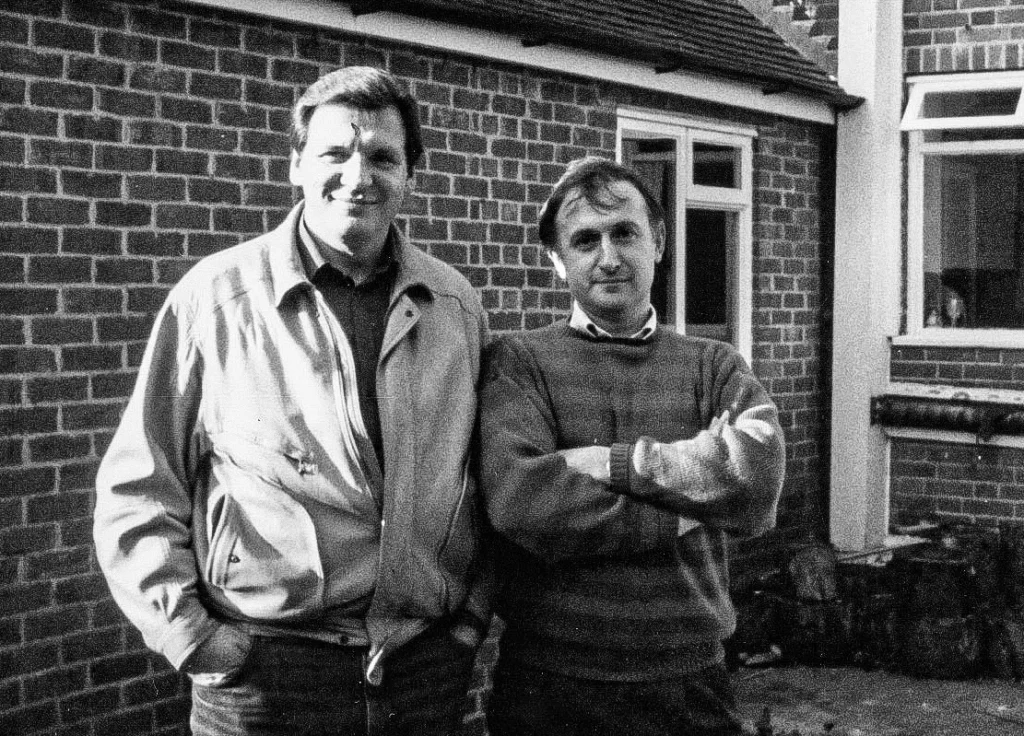
He picked Kuzichkin up in a quiet residential street, hid him under a blanket in the back of a Land Rover, and drove him to the British embassy. The two men went directly to a bathroom, where McCredie, correctly assuming the Iranians had bugged the building, turned on every tap and switched on the radio before producing a bottle of Stolichnaya vodka. Over a full tumbler, Kuzichkin began to talk.
Read More: The CIA Officer’s Guide to Travelling Like a Secret Agent
He described the coup preparations in detail. He handed over the Soviet embassy’s phone directory, a document containing the names and details of more than one hundred KGB officers, agents, and diplomats. He agreed to continue working in place, photographing documents using a British miniature spy camera and passing the material to MI6. It was, by any measure, one of the most significant intelligence windfalls of the Cold War in that region.
And then the large Russian leaned forward from the wicker laundry basket on which he had been sitting, placed a hand on McCredie’s knee, and said he had something personal to ask.
He had no power in the bedroom. His marriage was suffering. He was certain that Western medicine was superior to anything available in the Soviet Union and that MI6 would have the answer. Could they help?
McCredie, who had been conducting this entire conversation while seated on a toilet, patted the hand and told him they would see what they could do.
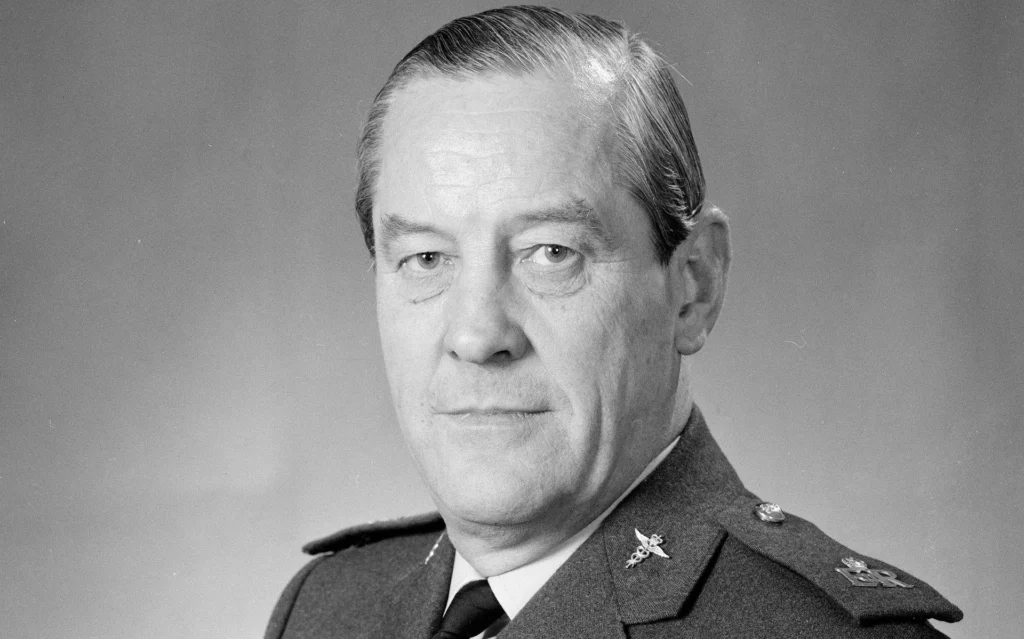
The matter was elevated to MI6’s chief medical officer, Air Marshal Sir Charles Soutar, who recommended iron and vitamin supplements. These were placed inside a ballpoint pen, accompanied by brief medical advice written in Russian, and smuggled into Tehran inside a diplomatic bag. It was not Viagra. MI6 hoped it might at least have a placebo effect.
Kuzichkin’s motive for one of the Cold War’s most consequential defections was not ideology, not money, not coercion. He wanted to save his marriage. In the history of intelligence, it is difficult to find a more human reason for an act with such enormous geopolitical consequences.
What Kuzichkin Handed Over and What It Cost
Over the following months, MI6 analysts in London worked through the intelligence Kuzichkin provided. The material was extensive and detailed. Soviet operations in Iran were mapped. Networks were identified. The coup plot was understood in its full operational scope and passed to the relevant authorities.
The CIA was brought in and given access to the intelligence. The details of Soviet agents operating in Iran, the names in that phone directory, the identities of Tudeh Party members and socialist activists connected to the Soviet network, were shared with the Khomeini regime.
The Islamic Republic of Iran used that intelligence with brutal efficiency. Nearly 200 people were arrested. Most of them were members of the Tudeh Party. Their leadership was arrested, and some were forced to deliver televised confessions and apologies. Eighteen Soviet diplomats were officially expelled from Iran. The coup plot was finished before it could begin.
The Western intelligence services had handed a theocratic regime they fundamentally opposed the tools to slaughter the very leftists the Soviets had spent years cultivating. And in doing so, they had saved Khomeini’s government from the most serious internal and external threat it had faced since coming to power. The same regime that the CIA and MI6 would spend the following decades trying to contain, isolate, and in various ways undermine, owed a significant part of its survival to an intelligence operation run out of a bathroom in Tehran, triggered by a Soviet officer’s request for vitamin supplements.
The Defection and What Came After
The stress of the operation eventually became unsustainable. Kuzichkin had been living under the strain of betraying his country while maintaining his cover inside the Soviet residency, and his marriage, the very thing he had defected to protect, was falling apart regardless. Galina had either discovered or been told about his activities, and Kuzichkin feared she would report him to the KGB. He triggered the emergency fallback plan he and McCredie had agreed in that first bathroom meeting.
MI6 gave McCredie three weeks to arrange the extraction. In October 1982 Kuzichkin was successfully exfiltrated from Iran across the Turkish border, becoming the first known officer to defect from Directorate S. He arrived in Britain and was debriefed extensively by both MI6 and the CIA. His memoirs were eventually published in 1990 under the title Inside the KGB: Myth and Reality.
Ben Macintyre, who has spent a career documenting the human texture of Cold War espionage, tells the full story in his recent book Redwood: The Untold Story of the Cold War’s Most Extraordinary Spy.
If you are interested in espionage or spy stories, check out our mini documentaries on YouTube!!