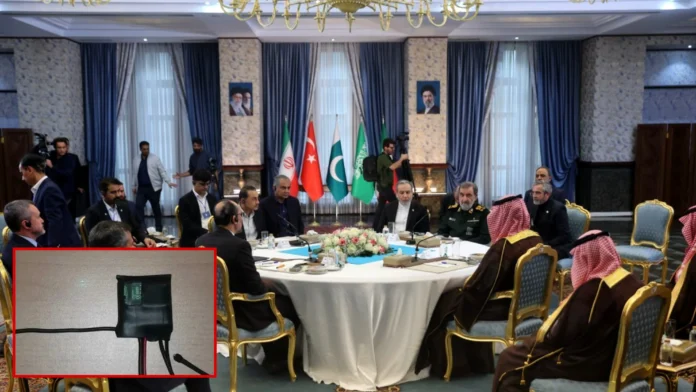
The claim arrived, as many do these days, through a post on X. A senior Pakistani journalist Gharidah Farooqi reported that a spy device had been discovered during a pre-meeting security sweep in Tehran, where Pakistan, Saudi Arabia, Turkey and Iran had gathered for a quadrilateral meeting.
Pakistani and Turkish intelligence teams conducted the sweep, found the device, removed it, and only then allowed the meeting to proceed, as per the journalist. The story spread quickly.
What has received less attention is the image attached to the claim.
➡️Read More: Europe’s Top 5 Spy Agencies, According to 60 Intelligence Experts
What the Image Shows
A reverse image search of the photograph used to illustrate the story leads to the product catalogue of Endoacustica, an Italian company that sells counter-surveillance and electronic security equipment commercially.
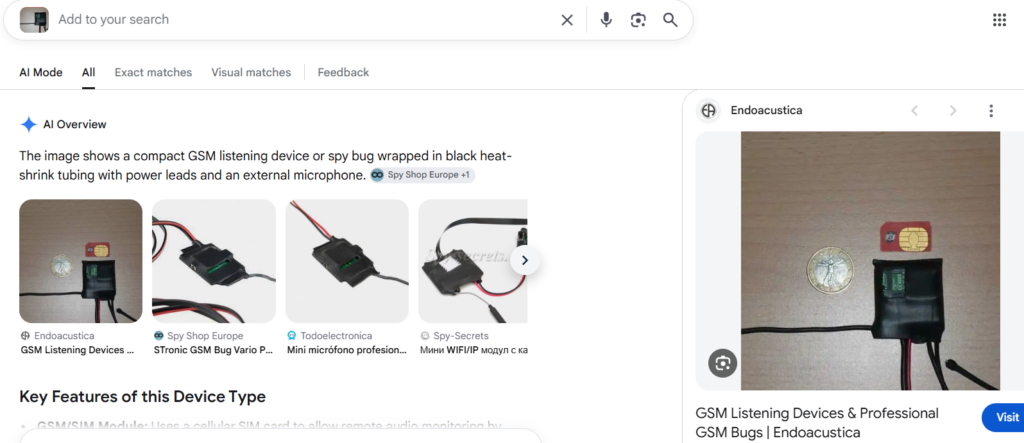
The device in the image is available for purchase without special authorisation. No coin. No SIM card. It is a standard product on a publicly accessible website.
This does not settle the matter either way. Pakistani and regional media outlets routinely use representative images when actual photographs of sensitive equipment are unavailable or cannot be published for security reasons.
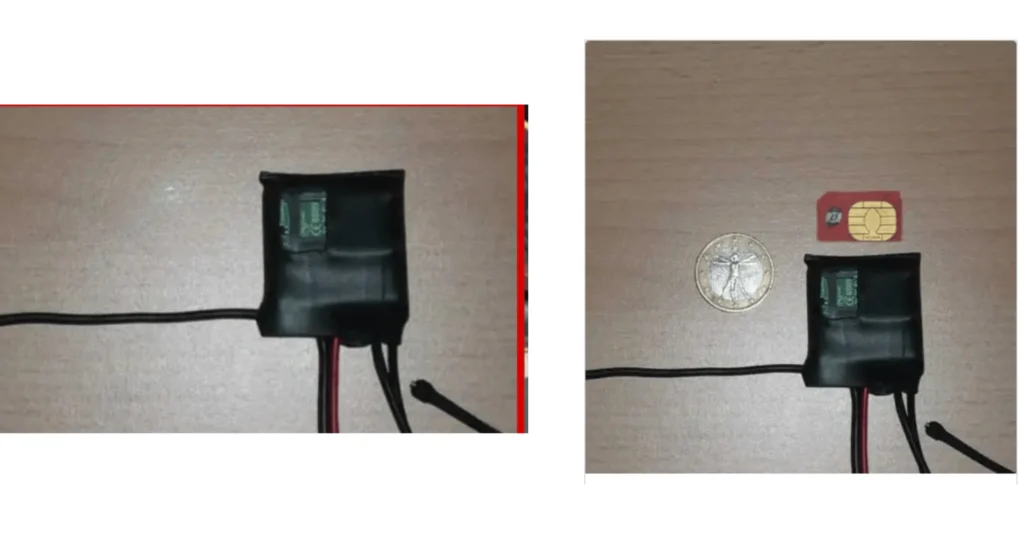
The image may simply be a placeholder, chosen to give readers a visual reference rather than to document the actual device found. But the use of a commercially sourced photograph to support a sensitive intelligence claim does raise a reasonable question about the strength of the sourcing behind the story.
Why the Meeting Matters
Whatever one makes of the bugging claim, the meeting itself deserves more attention than it has received.
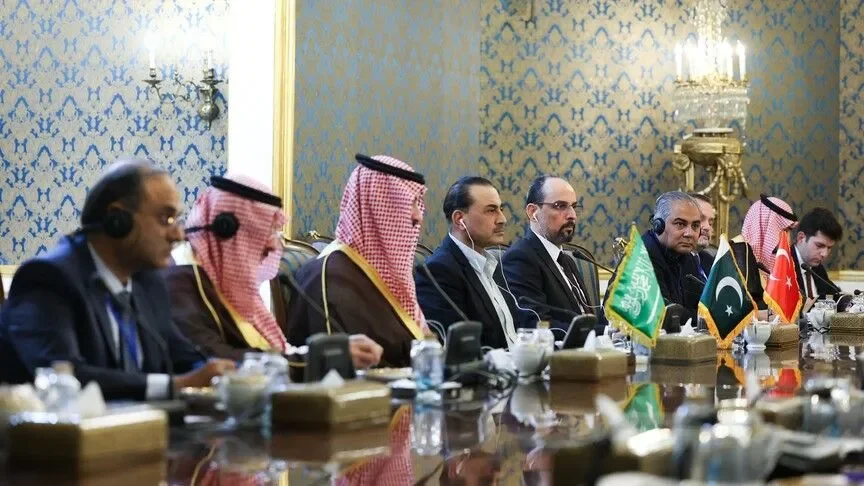
Pakistan, Saudi Arabia, Turkey and Iran sitting together in Tehran is not a routine diplomatic encounter. The four countries represent a significant combined weight in terms of military capability, energy resources and regional influence. The meeting comes at a moment of acute regional anxiety.
➡️Read More: What the Mecca Pact Really Means?
Reports have circulated suggesting the United States is considering military action against Iran after its midterm elections. Israel’s posture toward Tehran has remained aggressive, though reports emerged recently that the IDF chief of staff declined to follow a Netanyahu order to strike Iran, introducing a degree of uncertainty about how far Tel Aviv is willing to go and when.
Iran’s presence alongside the three signatories of the Mecca Joint Defence Agreement signed earlier this year is also notable. Tehran has broadly welcomed the pact as a stabilising development rather than a threat directed at it.
The Tehran meeting suggests all four countries are attempting to build a framework for managing what could come next, a renewed conflict that regional capitals across the board have made clear they want no part of.
It is precisely this kind of conversation that multiple outside intelligence services would have reason to want access to.
➡️Read More: Vladimir Kuzichkin: The Man Behind Iran’s Greatest Spy Purge
Where This Leaves Us
The honest conclusion is that the claim can neither be confirmed nor dismissed on the basis of what is currently available. Security sweeps before meetings of this significance are standard protocol.
Finding something during one, while notable, is not inherently implausible given the number of parties with an interest in the proceedings. But a commercially sourced image presented as evidence of a covert spying device is a credibility problem that the original reporting has not adequately addressed.
The story may yet prove to be accurate. Until it is supported by stronger sourcing, it is better read as a claim worth watching than a fact worth repeating.